

Wound Suturing & Minor Procedures
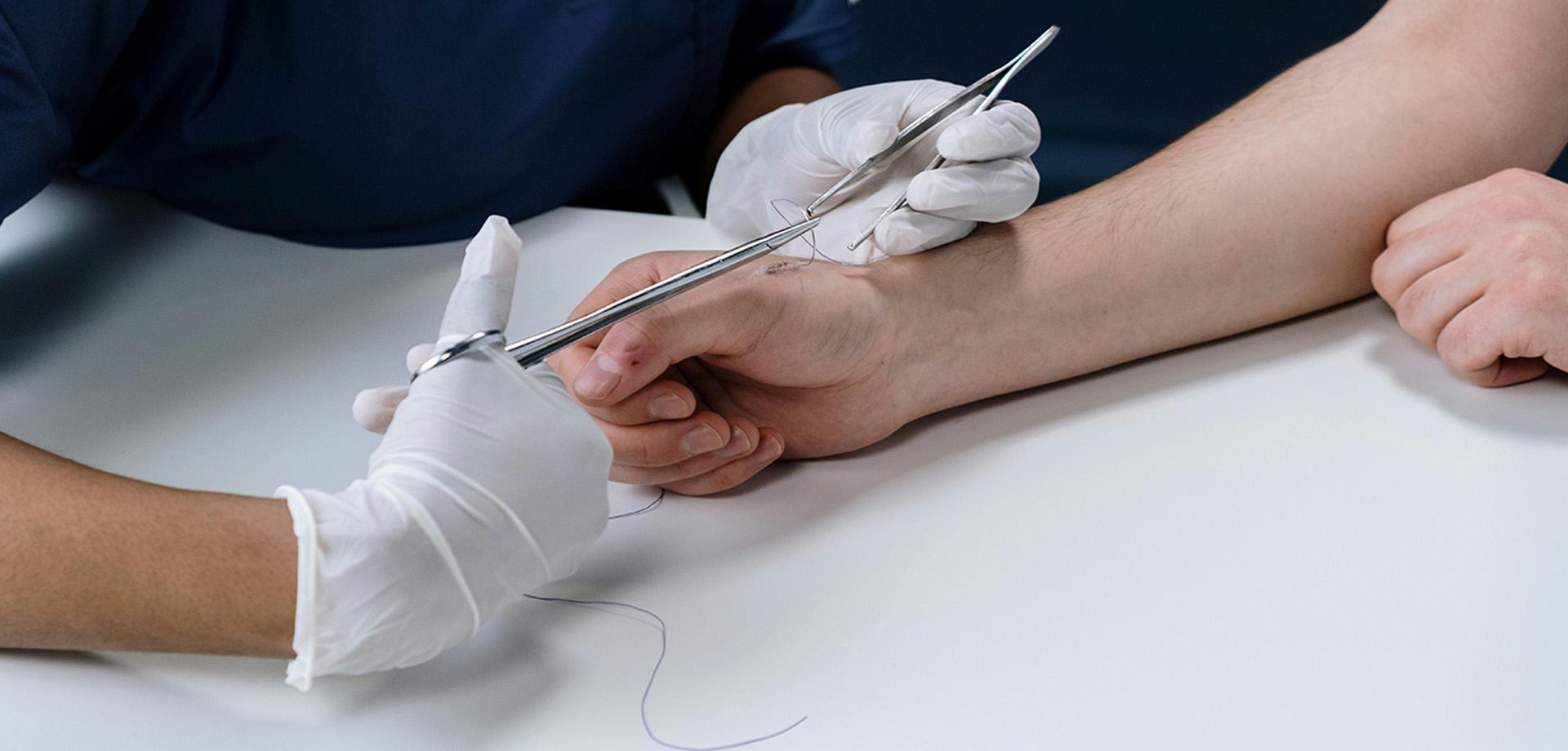
Wound suturing and minor emergency procedures are essential components of comprehensive emergency department care. In busy emergency settings across Dubai and the UAE, patients frequently present with lacerations, cuts, abrasions, animal bites, minor burns, and soft tissue injuries resulting from road traffic accidents, workplace incidents, sports injuries, and domestic accidents. Prompt evaluation and proper wound management are critical to prevent infection, reduce scarring, restore function, and promote optimal healing.
The initial assessment of a wound includes determining the depth, length, mechanism of injury, contamination level, and involvement of underlying structures such as tendons, nerves, or blood vessels. Emergency physicians carefully evaluate bleeding control, neurovascular status, and risk factors such as diabetes or immunocompromised states that may affect healing.
Before suturing, the wound undergoes thorough cleaning and irrigation to remove debris, bacteria, and foreign materials. Proper wound debridement reduces infection risk and improves cosmetic outcomes. Local anesthesia is administered to ensure patient comfort during the procedure. In pediatric patients, child-friendly techniques and sedation protocols may be used to minimize distress.
Suturing techniques vary depending on wound type and location. Simple interrupted sutures are commonly used for straightforward lacerations, while layered closure techniques may be necessary for deeper wounds involving subcutaneous tissue. For facial injuries, fine suturing methods are applied to minimize visible scarring. In some cases, alternative closure methods such as skin adhesives, staples, or steri-strips may be appropriate.
Minor emergency procedures also include abscess drainage, removal of foreign bodies, nail bed repair, incision and drainage of infected wounds, minor burn management, and simple cyst excision. These procedures are performed in a sterile environment with appropriate analgesia and follow established infection control standards.
Tetanus prophylaxis is administered when indicated, and antibiotics may be prescribed for contaminated wounds or high-risk injuries. Clear discharge instructions are provided regarding wound care, signs of infection, suture removal timelines, and follow-up appointments.
In the UAE, where high temperatures and humidity can increase infection risks, proper wound care education is especially important. Emergency departments are equipped with sterile procedure rooms, suture kits, wound irrigation systems, and trained clinical teams to deliver safe and effective care.
Timely wound management not only improves cosmetic results but also reduces complications such as cellulitis, abscess formation, delayed healing, and functional impairment. Early intervention ensures faster recovery and better patient satisfaction.
Wound suturing and minor emergency procedures are integral to emergency medicine services. By combining meticulous technique, infection prevention strategies, and patient-centered care, emergency departments provide efficient treatment for a wide range of minor yet potentially significant injuries.
The initial assessment of a wound includes determining the depth, length, mechanism of injury, contamination level, and involvement of underlying structures such as tendons, nerves, or blood vessels. Emergency physicians carefully evaluate bleeding control, neurovascular status, and risk factors such as diabetes or immunocompromised states that may affect healing.
Before suturing, the wound undergoes thorough cleaning and irrigation to remove debris, bacteria, and foreign materials. Proper wound debridement reduces infection risk and improves cosmetic outcomes. Local anesthesia is administered to ensure patient comfort during the procedure. In pediatric patients, child-friendly techniques and sedation protocols may be used to minimize distress.
Suturing techniques vary depending on wound type and location. Simple interrupted sutures are commonly used for straightforward lacerations, while layered closure techniques may be necessary for deeper wounds involving subcutaneous tissue. For facial injuries, fine suturing methods are applied to minimize visible scarring. In some cases, alternative closure methods such as skin adhesives, staples, or steri-strips may be appropriate.
Minor emergency procedures also include abscess drainage, removal of foreign bodies, nail bed repair, incision and drainage of infected wounds, minor burn management, and simple cyst excision. These procedures are performed in a sterile environment with appropriate analgesia and follow established infection control standards.
Tetanus prophylaxis is administered when indicated, and antibiotics may be prescribed for contaminated wounds or high-risk injuries. Clear discharge instructions are provided regarding wound care, signs of infection, suture removal timelines, and follow-up appointments.
In the UAE, where high temperatures and humidity can increase infection risks, proper wound care education is especially important. Emergency departments are equipped with sterile procedure rooms, suture kits, wound irrigation systems, and trained clinical teams to deliver safe and effective care.
Timely wound management not only improves cosmetic results but also reduces complications such as cellulitis, abscess formation, delayed healing, and functional impairment. Early intervention ensures faster recovery and better patient satisfaction.
Wound suturing and minor emergency procedures are integral to emergency medicine services. By combining meticulous technique, infection prevention strategies, and patient-centered care, emergency departments provide efficient treatment for a wide range of minor yet potentially significant injuries.
Quick Contact
If you have any questions simply use the following contact details.

Working Hours
-
Out-patient Department
Monday to Saturday 08:00 AM - 09:00 PM
Sunday 10:00 AM - 06:00 PM
-
Emergency Department & Pharmacy
Sunday to Saturday 24x7


Book Appointments, Inquire, or Manage Your Care Easily – Get in Touch via
 04 406 3000
  04 406 3000
Quick Links
Legal
Working Hours
-
Out-patient Department
Monday to Saturday | 8 AM to 9 PM
Sunday | 10 AM to 6 PM
Emergency Department & Pharmacy | 24x7
Connect with us!




©2026 IMH. All Rights Reserved. Ministry of Health License No : YP7TYZVC-090326